Never born, then maybe died twice
But for three modern miracles

“Your balls are baked aren’t they, mate”.
He would not have been born
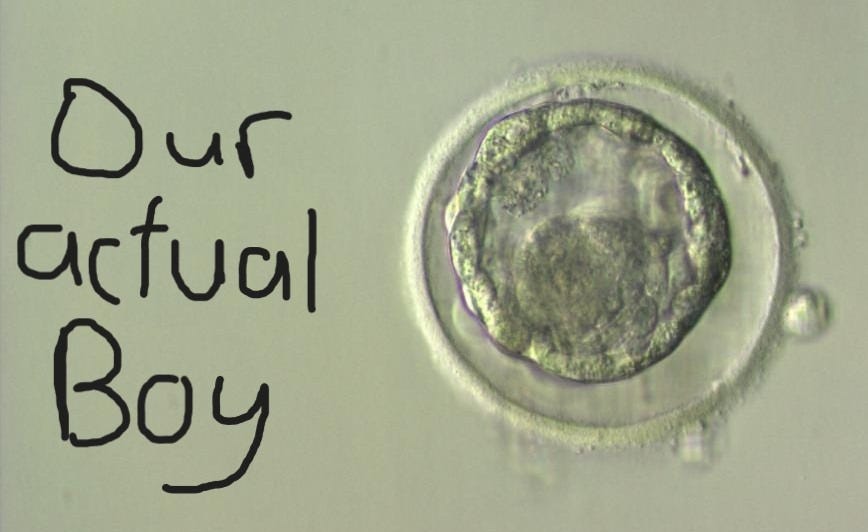
Thanks Lyndon1, that describes the situation. Like almost 1 in 10 modern men, my sperm weren’t up to the task - at least not the old fashioned way. So IVF it was, the miracle that now feels commonplace.
We landed on the moon and Woodstock changed music forever. But in 1969 a quieter event transformed the world - the first human embryo was fertilised “In vitro”, outside the body. Then 48 years ago, Louise Joy Brown was the first woman born through IVF. This year about a million babies will be born through IVF.
IVF stands at the frontier of rich-privilege, a norm for the middle class in rich countries. In my home country New Zealand, the government even pays for it! Yet every week I meet women here in Northern Uganda who can’t have kids, and could never afford IVF. Even the human “right” to have a kid can depend on where you are born.
If I was born 25 years ago, or in Uganda, my boy would never have been.
Our Risky Choice
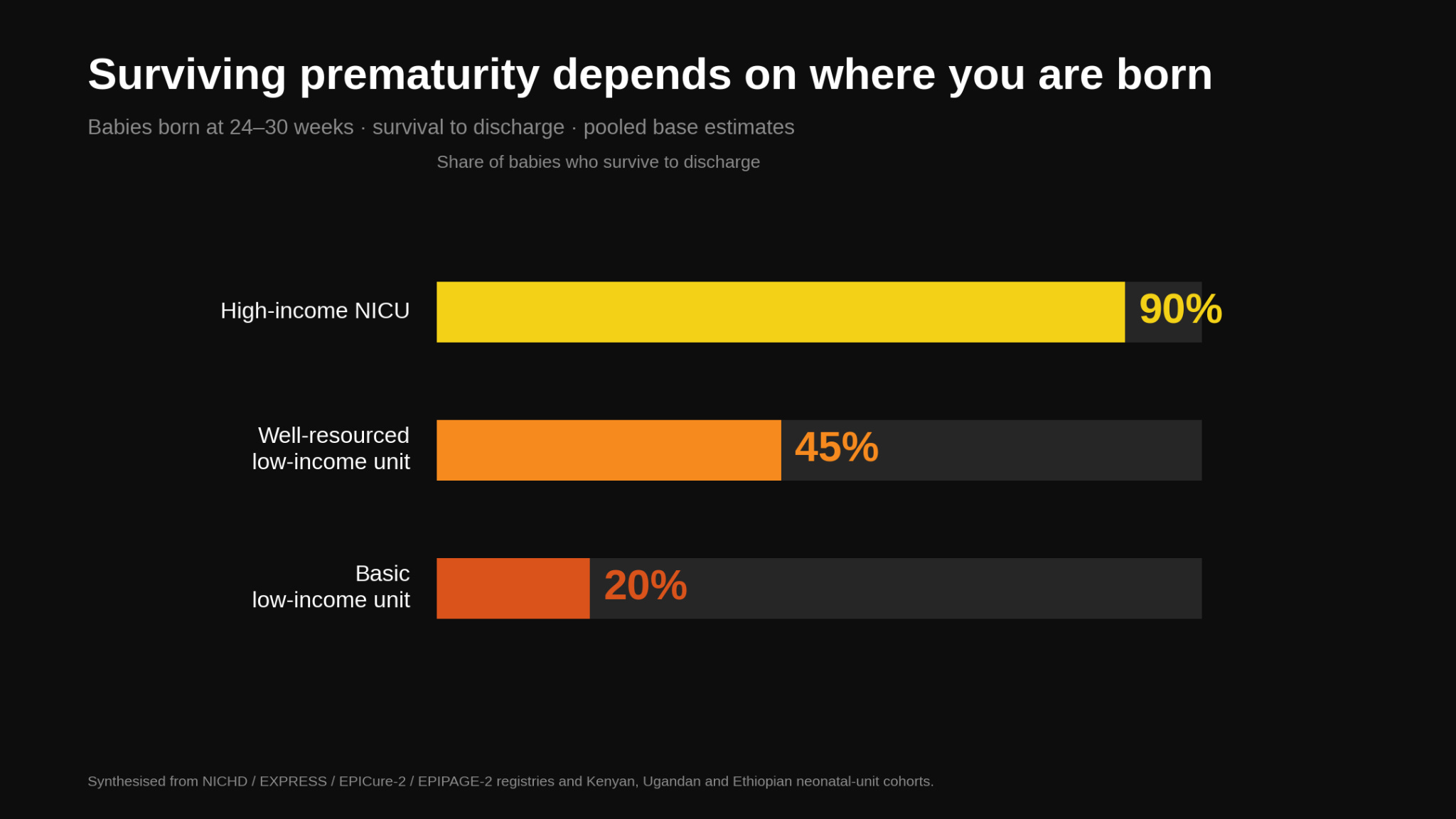
We decided to give birth in Lacor Hospital, the best hospital here in Northern Uganda and where I worked as a doc 15 years ago. If you’re wondering, yes this was risky. While we judged the hospital would be safe for my wife, should something go wrong and our boy needed the neonatal intensive care unit (NICU), he would be less likely to die in New Zealand. By my rough calculations, perhaps three times less likely. Even a good Ugandan hospital is far worse than one in New Zealand, for a few reasons
Prematurity: Better hospitals keep more premature babies alive. If born between 24 and 30 weeks, our boy would be twice as likely to survive in New Zealand, compared to where we gave birth.
Infections. Basic infection control just isn’t as good compared to a high-income NICU. Parents enter the NICU here en-masse to feed their kids and spread bugs around. Super-bugs aren’t tested for. Hands are less-washed. Cutting-edge antibiotics aren’t available. Our boy would be more likely both to catch an infection and then die from it.
Fewer staff and stuff. Fewer nurses and doctors, and less high-tech machines mean that problems will be diagnosed and treated later and more mistakes made. Despite staff’s best effort, kids just can’t be monitored and cared for with the same intensity in Northern Uganda as they can in New Zealand.
Months before birth, a couple of people expressed “you’re mad to put your child at more risk”. This might be true, but the overall risk seemed lowish. We wanted to give birth close to our home of 13 years, in relationship and solidarity with our community. Our privilege meant we had the Lacor Hospital “A team” on the case, with a dedicated gynaecologist and midwife. But despite their best efforts, things didn’t go as planned.
He didn’t die once - a routine miracle
“His head isn’t moving” are not words you want to hear. Our boy’s head made it through the cervix, then he got stuck completely. No maneuver, nor three scary suction attempts could move out poor boy past that liminal space between the safety of the womb and our wild world. My wife suffered, our midwife sweated, fear set in.
In most times and places in human history, this would have been the end. For our baby, or wife, or both. But we were in the right place at the right time, with a life-saving procedure just a theatre away.
We thank the Roman innovators who first cut babies from dead lifegiving mothers. We thank the farmer Jacob Nufer, who in 1500 used his experience from pigs to first save both his wife and their baby. We thank Fransour Rousset, who proposed enfantement caesarien as a routine life-saving surgery. From the 1800s we thank Morton (ether) and Simpson (chloroform) for safer and less painful surgery. We thank Semmelweis for clean hands and Lister for antiseptics. Max Sanger who first decided to actually stitch the uterus closed. Landsteiner and Fleming for blood transfusions and antibiotics.
We recognise your contributions towards saving over 50 million mothers and babies.2
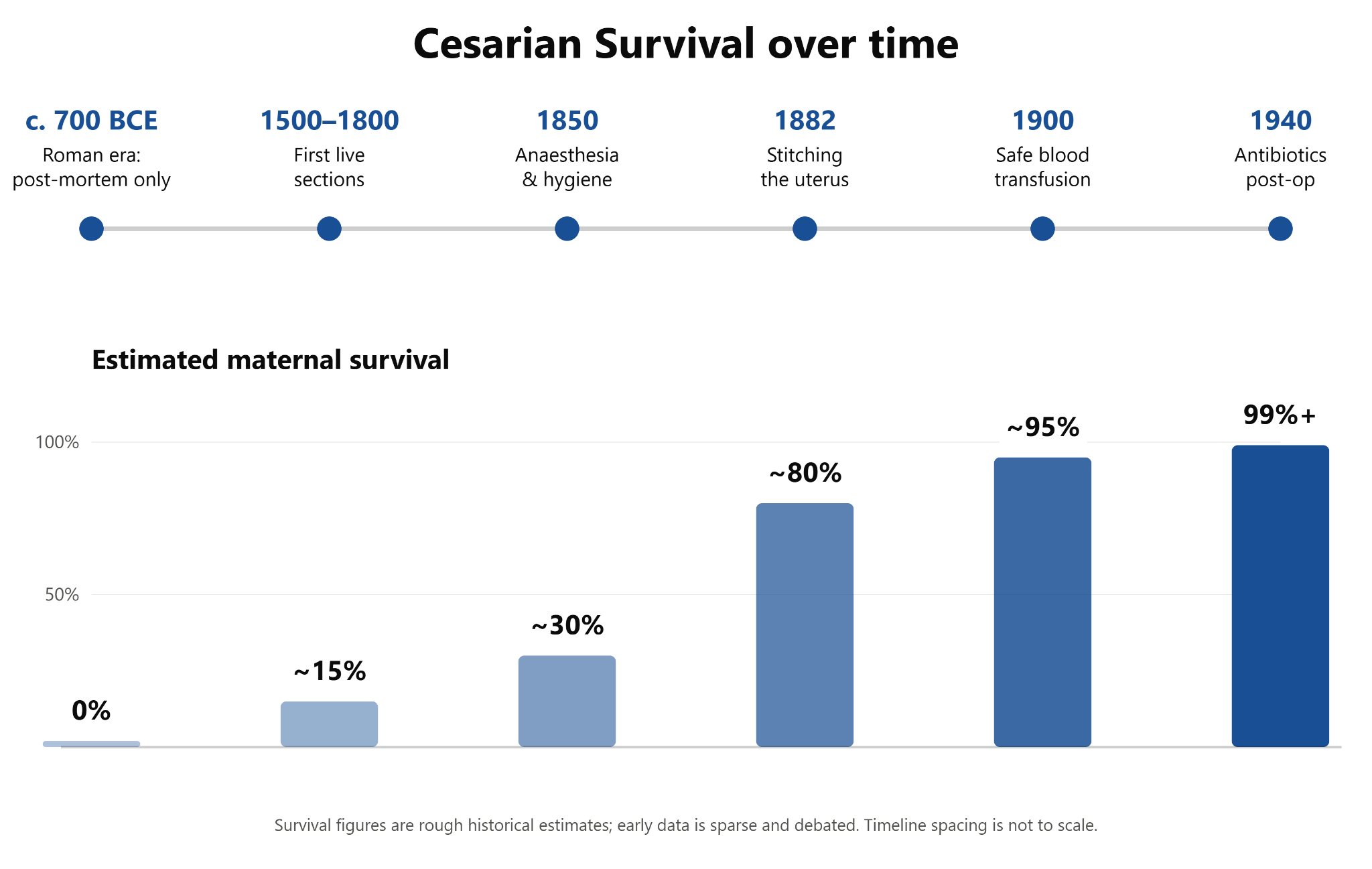
Even in one of the poorest countries on earth, I didn’t doubt our surgeon’s safe scalpel. Humanity’s stacked innovations have made this miracle almost routine.
Our boy was safely born.
He didn’t die twice - Neonatal care
After the exhilaration of holding our boy for the first time, things weren’t as they should be. He didn’t feed properly, became lethargic and turned a bit yellow. A doctor’s assessment was enough to confirm our fears. He was jaundiced and had a fever - he might have the dreaded neonatal sepsis.
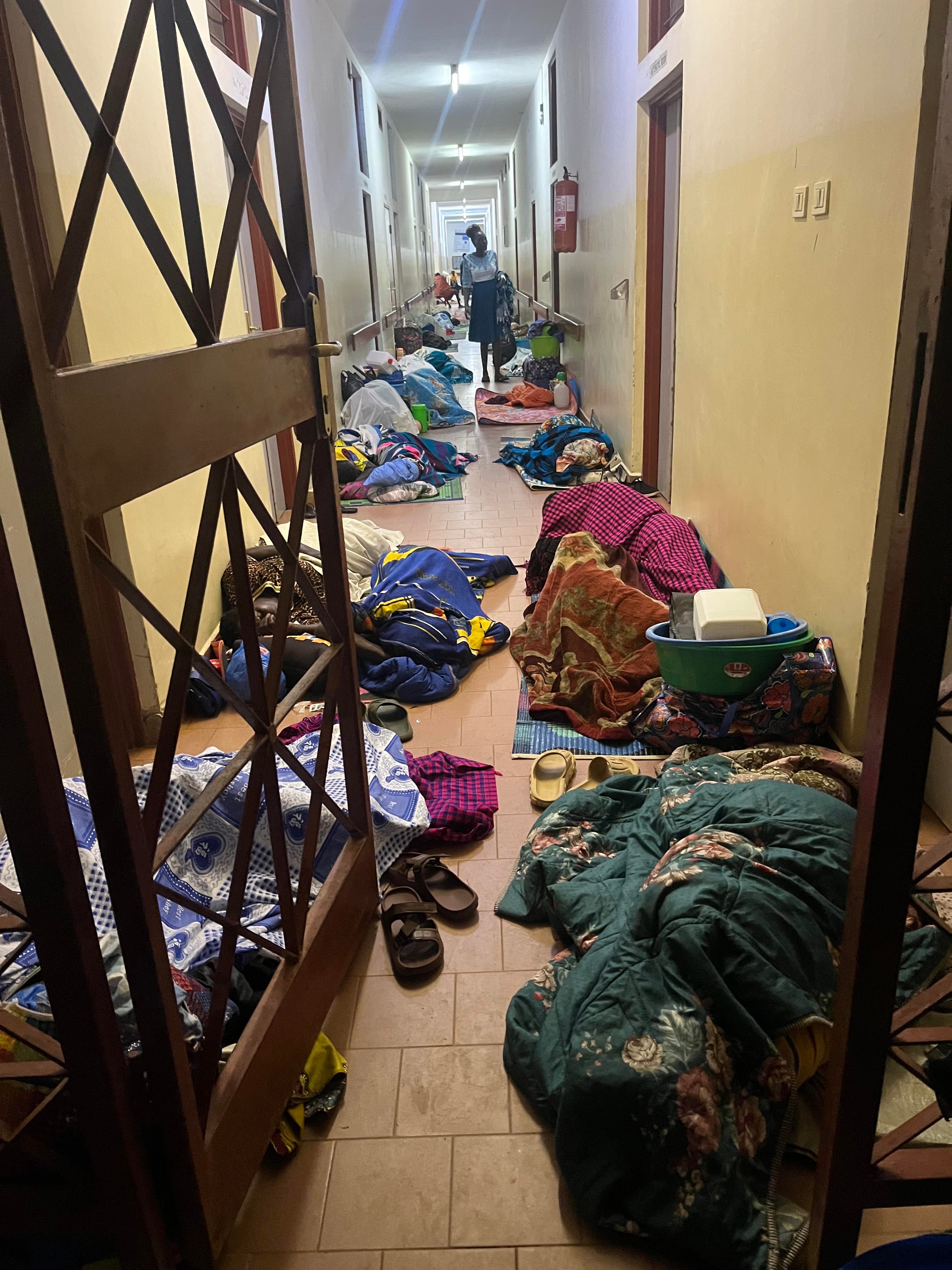
We were fortunate to occupy one of four private rooms, with running water, wall plugs and two beds - luxuries the 20 other NICU families did not have. Every 2 hours as we moved to the NICU to feed him, we tiptoed over carers who lined the corridor. I was overwhelmed with guilt from two angles. First that we paid $30 a day for a private room while others slept on the floor. And guilt at our decision not to give birth in New Zealand, where our boy would be more likely to live. Guilt at our immense privilege, and guilt that we hadn’t used it to the max.
Over the next 10 days yet another wonderful set of innovations helped him pull through. Our resource poor NICU was still equipped with the most important life-saving interventions, and kept our boy warm, well monitored and infection free.
In 1880, Dr. Tarnier noticed that Paris zoo’s warming chambers kept young birds alive, and wondered why we didn’t do the same for sick human babies. Within a few years his colleague Dr. Bodin proved that incubators save lives, but as we’ve seen over the last 20 years with vaccine hesitancy, science alone isn’t always enough. Incubators needed to go viral. So they signed up an “influencer” to make incubators mainstream. Dr. Couney’s business model would be unthinkable today. Mothers got free incubator care, with costs paid for by thousands of tourists who paid entrance fees to see odd-looking premature babies in the strange space-age incubator machines.
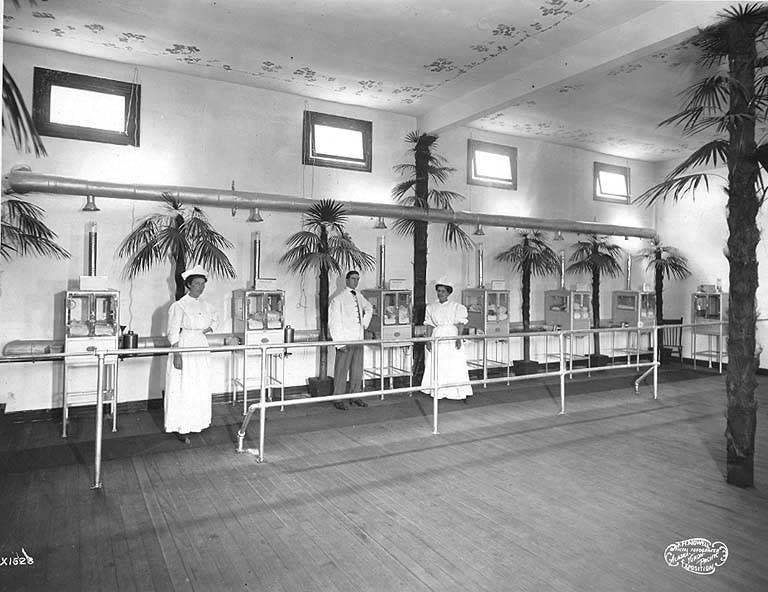
Couney (middle) at his exhibit for the Alaska–Yukon–Pacific Exposition, 1909 (from wikipedia)
“Couney’s Child Hatchery” was a wild commercial and medical success and helped catapult incubators into the mainstream, while warming babies become a norm around the world. Progress sometimes needs all of great ideas, science and PR to scale.
But on the newborn care front, we haven’t “won” the battle to the same extent as with the C-Section. 5000 children under one month old still die every day and 500 of those from neonatal sepsis.
Our boy had lethargy, poor feeding and fever, but hospitals can’t just put all lethargic babies in NICU on all out treatment - especially not in low-income settings. Neonatal sepsis has a diagnosis problem. No single test, or range of clinical features tells us if there’s sepsis. A Center for Global Development team believes this test could be a great life-saving bet, and have proposed a fund of 60 million dollars for any company that develops a working test. For the moment this remains a dream, good tests are far harder to invent than vaccines and treatments.
We would have LOVED one simple test to tell us if our boy was at risk of death, or just struggling a bit to get going.
I am Grateful
At a different time, or even right now in a different place our boy would never have been born and might have died twice. We thank the hundreds of innovators and medical staff who took their life saving ideas and made them real. We thank the doctors and nurses who worked with limited resources to help our boy survive and thrive. We thank my mum who struggled with us in those early weeks.
And more than ever I’m grateful for my work with OneDay Health. A friend thought “After you have a kid, your work will feel less important”. But no, it feels more urgent and more important than ever. Even after the worst two weeks of my life, I can’t walk in the shoes of my friends here. I can’t imagine not having two dollars to treat my newborn’s malaria. Or 20 dollars to reach hospital to give birth. Or even not having $5,000 to cure my child’s heart defect.
But I can imagine doing something today to help these babies live, and there’s never been a better day than today.
“If you had to choose a moment in history to be born, and you did not know ahead of time who you would be — you didn’t know whether you were going to be born into a wealthy family or a poor family, what country you’d be born in, whether you were going to be a man or a woman — if you had to choose blindly what moment you’d want to be born, you’d choose now.” - Barrack Obama
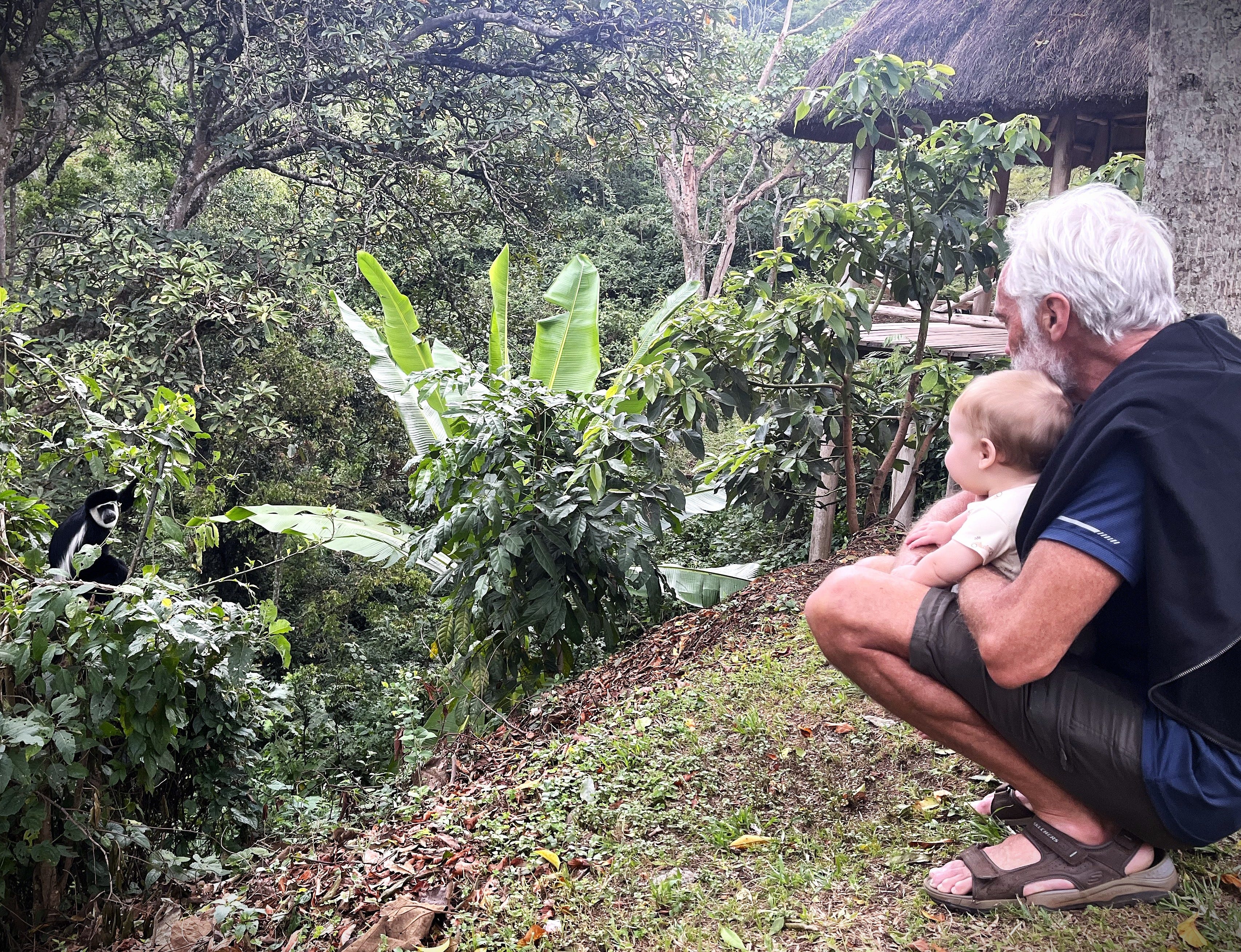
His real name, he deserves it
Claude’s conservative estimate
Beautiful. Very moving. Appreciate you sharing this, Nick.
So many things to be grateful for. So easy to forget